
Plastic Cap Moulds · 10 min read
Published: September 29, 2026
Bottle Cap Mold Cavity Selection Guide: 8 to 96 Cavities
Choose a cap mould cavity count from saleable output, machine compatibility, maintenance capacity and total-cell investment.
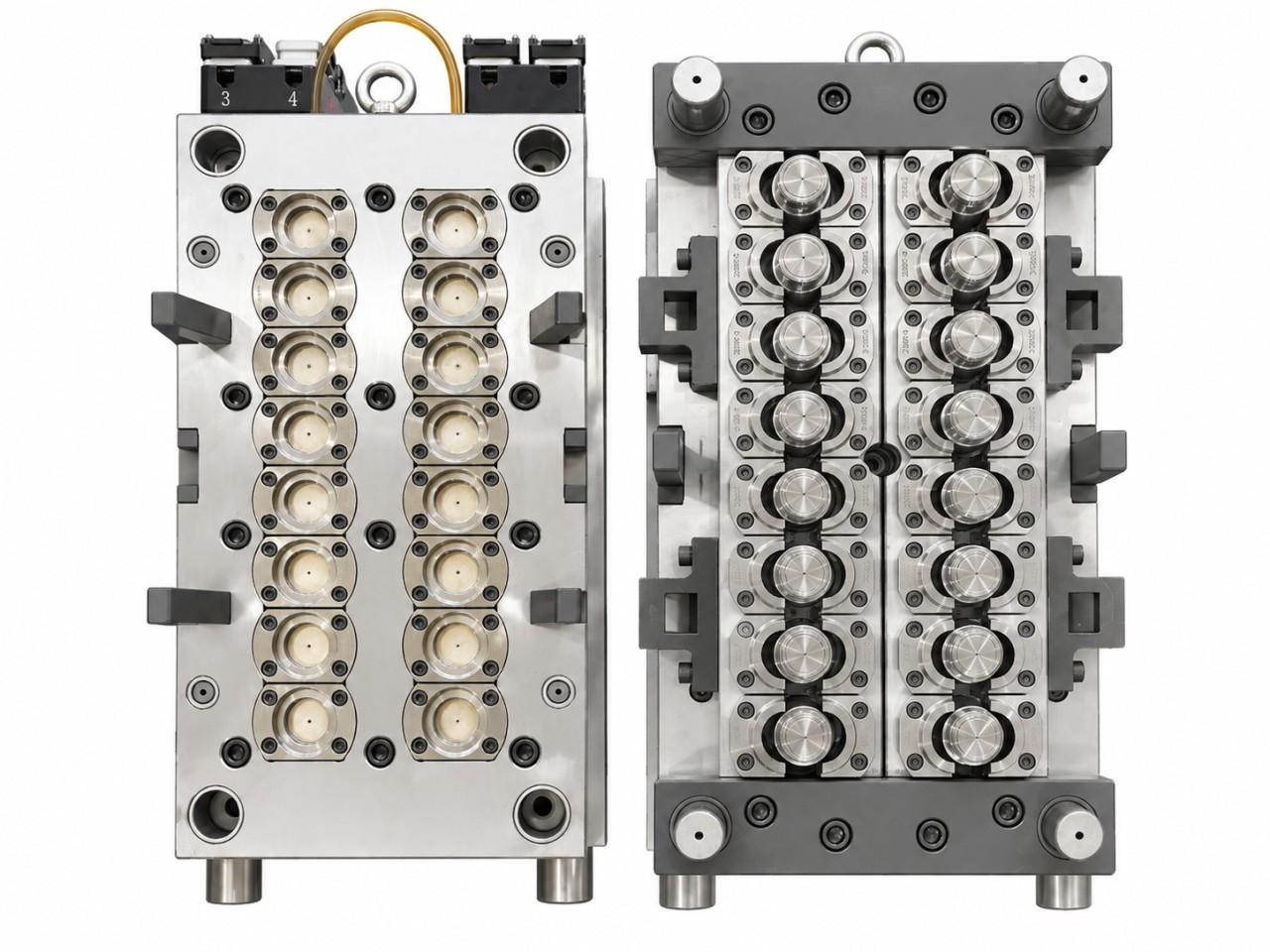
Bottle cap mould cavity selection is a capacity, machine and risk decision. A 96-cavity mould is not automatically more economical than a 24- or 48-cavity mould if the injection machine, hot runner, cooling system, maintenance resources or demand profile cannot support it.
This guide compares common 8, 16, 24, 32, 48, 64, 72 and 96 cavity options. It does not prescribe universal cycle times or output figures; those must be confirmed for the actual cap, resin, mould and production cell.
Start With Required Good Parts, Not the Largest Cavity Count
Calculate annual demand from saleable caps, planned operating hours, anticipated scrap, planned maintenance and line availability. Then compare feasible cavity counts against the injection machine’s shot capacity, clamp force, platen dimensions, nozzle arrangement and utilities.
The relevant output equation is simple: saleable parts per hour depend on cavity count, sustained cycle time and yield. The difficult part is proving that all three remain stable after installation. Ask suppliers to state their assumptions instead of comparing an optimistic cycle figure from one short factory trial.
Cavity Selection Matrix
| Cavity count | Typical decision context | Machine-size implication | Capacity direction | Investment direction |
|---|---|---|---|---|
| 8 | development, lower regional demand or specialised closure | compact machine possible | lower | lower |
| 16 | growing demand with manageable maintenance scope | moderate | moderate | moderate |
| 24 | established programmes seeking balanced output | moderate to larger | medium | medium |
| 32 | continuous production where cell integration matters | larger | medium-high | medium-high |
| 48 | high-volume water, beverage or commodity closures | larger, stable utilities required | high | high |
| 64 | mature high-output programme | high-capacity cell | high | high |
| 72 | application-specific high-cavity plan | high-capacity cell | high | high |
| 96 | sustained large-volume programme with strong process control | major production cell | very high | very high |
This is a decision framework, not a machine-sizing chart. Actual clamp force, injection volume, plastification, nozzle pitch and cooling load are cap-specific.
Cycle Time: Compare Stable Production, Not a Single Number
Cycle time is affected by cap wall thickness, resin, gate design, cooling, ejection, automation, mould temperature, line discipline and cavity balance. High cavitation can spread fixed time across more parts, but it also makes balance and maintenance more consequential.
Ask for the trial conditions behind any quoted cycle time: resin type, machine model, hot-runner setup, mould temperature, sample count and evidence that samples were taken across the cavity layout. If a result cannot be explained, it cannot be used confidently in a financial model.
Machine Size and Cell Compatibility
Before choosing 48 cavities or above, confirm more than clamp tonnage. The machine should accommodate the mould envelope, platen pattern, injection unit, hot-runner electrical load, cooling connections, ejection requirement and automation space. A cap mould may also need coordination with a cap slitter, vision inspection, conveyor, liner application or packing system.
Installation preparation should document voltage, controller interfaces, water quality and flow, air supply where used, lifting points, safety requirements and start-up responsibilities. These details reduce avoidable delays after shipment.
Production Capacity and Maintenance
Higher cavity count raises potential output but also increases the number of cavity, core, gate and cooling components that need traceable maintenance. A buyer should ask for a cavity map, critical-spares list, wear-part references and instructions for isolating or servicing a component where the mould design permits.
For high-cavity programmes, review preventive maintenance before purchase. This includes cooling-circuit checks, gate inspection, heater and thermocouple records, guide and alignment condition, and a documented spare-parts package.
Investment Cost: Consider the Whole Cell
Investment cost includes more than the mould. A higher-cavity solution can require a larger injection machine, stronger cooling, more sophisticated hot runner and controller, handling equipment, inspection capacity, spares and technical support. The right decision compares lifecycle operating practicality with the demand profile rather than focusing only on initial mould price.
Factory Testing and Shipment Inspection
For each cavity proposal, define the acceptance evidence before manufacture. A meaningful factory test records mould operation, identified samples, cap weight and appearance, relevant functional checks and any open points. Shipment inspection should cover mould condition, spares, wiring and water labels, export preservation, documents and crate closure.
Frequently asked questions
Is 96 cavities always the lowest unit-cost choice?
No. It can offer high output, but only when demand, machine capability, utilities, maintenance and process control justify the added system complexity.
How should cycle time be used when comparing quotations?
Use the stated cycle time only with its assumptions and validation evidence. Compare sustained, saleable output rather than an isolated trial claim.
What information is needed for a cavity recommendation?
Provide cap drawing, resin, annual demand, operating hours, injection-machine details, downstream equipment and production constraints.
Talk to a mould engineer
Request a cavity proposal: Send your cap drawing, annual output target and injection-machine details for a practical 8-to-96 cavity comparison.
Get a Quote →