
Plastic Cap Moulds · 10 min read
Published: October 9, 2026
Plastic Cap Mould Colour Change and Purging: A Buyer Control Guide
Turn colour changes from an informal machine-side task into a controlled release procedure for every cap cavity.
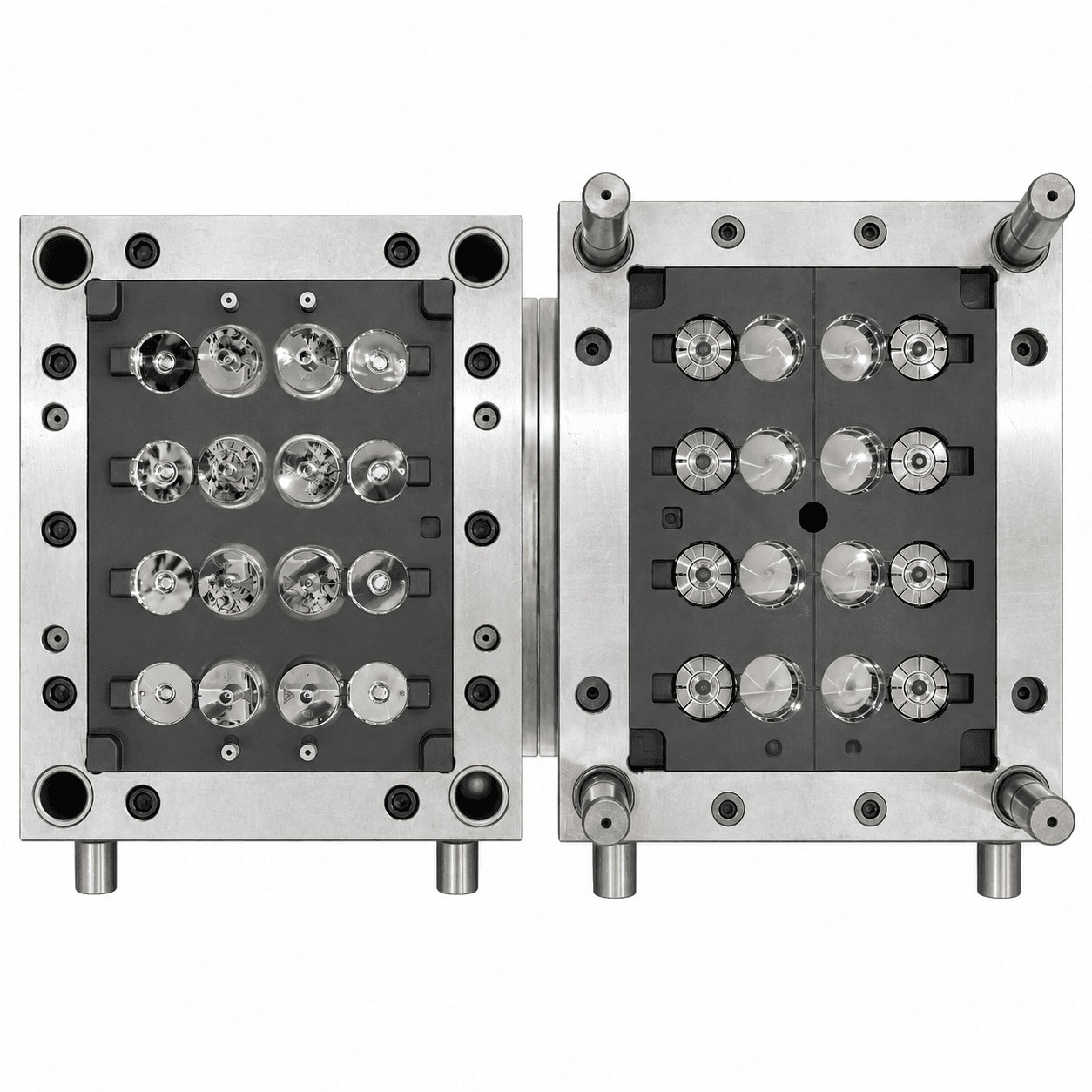
Colour changes are not simply a request to switch masterbatch. Residual material can remain in the machine barrel, screw, nozzle, hot runner, gates and moulded parts. In a multi-cavity cap mould, a single slow-clearing flow path can create mixed colour, streaks, black specks or inconsistent shade after the rest of the tool appears clean. Buyers should therefore define colour change as a controlled production and quality-release process, not as an informal adjustment by an operator.
This guide explains what to agree before production, what to record during a change, and how to release the first saleable caps. It applies to PP and HDPE closures; resin suppliers and the site safety procedure remain the authority for material-specific temperatures and purging compounds.
Define the Colour-Change Boundary Before Production
List every material that may run: resin grade, approved masterbatch, additive package, recycled-content rule, colour standard and change sequence. Confirm whether the change is between light and dark shades, transparent and opaque material, food-contact and non-food applications, or different resin grades. These situations carry different contamination and cleaning risks.
Agree where responsibility begins and ends. The mould supplier can explain hot-runner configuration, gate access and safe operating limits. The processor controls drying, barrel cleaning, process settings, purging material and operator training. The buyer should define the acceptable colour reference, inspection lighting, first-off approval authority and the disposition of purge and transition parts.
| Control point | Buyer decision | Evidence to retain |
|---|---|---|
| Resin and masterbatch | Approved grade, supplier and colour reference | Material lot and colour record |
| Change sequence | From/to colours and any restricted combinations | Released change instruction |
| Mould and hot runner | Temperature limits and safe purge method | Controller settings and mould record |
| First-off samples | Cavities, sampling interval and acceptance rule | Cavity-labelled samples and inspection log |
| Scrap handling | Segregation and permitted reuse route | Quantity and disposition record |
Control the Machine, Hot Runner and Mould Separately
Do not assume a clean barrel means a clean mould
The screw and barrel are only part of the melt path. Residue may sit in the nozzle, manifold, tips, gates or low-flow areas. Follow the resin supplier's approved cleaning approach and the mould maker's documented temperature and pressure limits. Do not improvise high temperatures, aggressive purge compounds or disassembly while the tool is in the machine; those actions can damage seals, surfaces or heaters.
Record the stable process before the change: machine, mould revision, active cavities, resin and masterbatch lots, barrel and hot-runner settings, cycle time and back pressure where relevant. After the purge, return to the agreed production window gradually. A colour change is not complete merely because the sprue or one visible cap looks correct.
Release by cavity, not by a mixed pile
Take first-off caps by cavity and by time or cycle sequence. Inspect under the agreed lighting for shade difference, streaks, contamination, black specks, gate blush and surface gloss. Compare cap mass and critical visual features with the approved baseline, because an altered setting can mask a material or flow problem. A mixed bulk sample can hide one cavity that clears later than the others.
If the cap is used with a matching bottle, retain the normal functional checks for thread, seal and tamper features. Colour approval does not replace package qualification; it only confirms the stated material and appearance condition.
Build a Repeatable Restart and Release Plan
Set an objective acceptance point
Define the number of consecutive acceptable cycles, sampled cavities and required visual or instrument check before saleable production begins. For critical colours, use an approved plaque, customer standard or agreed colour-measurement method. Do not use a photograph on a phone as the only release standard because lighting and display settings vary.
The record should identify the operator, change start and finish time, material used, settings, purge quantity, rejected quantity, cavity observations, retained sample IDs and approver. When results differ from the baseline, classify the cause before adjusting the mould: material lot, masterbatch dispersion, contamination, hot-runner balance, temperature, shear history or inspection conditions may each require a different response.
Protect future troubleshooting and maintenance
Keep a colour-change log with the exact from/to material combination and any additional steps that were required. Repeated long clearing time from one cavity can indicate a flow or thermal issue worth investigating; it should not become invisible routine scrap. Keep the hot-runner controller record, maintenance history and spare-part identity with the mould documentation.
Before shipment or site handover, request the mould manual, hot-runner operating limits, connection diagram, approved trial record, cavity map, recommended start-up/shutdown sequence and a list of materials or actions that require supplier review. At the receiving site, prove the procedure on the actual machine with the actual resin and colour system before treating the FAT result as a production guarantee.
Conclusion
Reliable colour change comes from a controlled melt path, cavity-level inspection and documented restart criteria. By separating machine cleaning from hot-runner and mould controls, and by releasing caps cavity by cavity, buyers can reduce transition scrap without making unsupported claims about every future resin or colour.
Frequently asked questions
Can one cap mould run several colours?
Usually yes, when the resin, masterbatch and mould operating window are compatible. Each colour change still needs a documented purge and first-off approval process.
How do we know when purging is complete?
Use the agreed consecutive-cycle and cavity-level inspection rule. A single clean-looking cap or runner is not sufficient evidence for a multi-cavity tool.
Can transition caps be reground?
Only if the buyer's resin, food-contact, quality and traceability rules permit it. Segregate and record them until the permitted disposition is confirmed.
Does a successful factory colour trial guarantee every future colour change?
No. It establishes evidence for the documented resin, colour, machine and procedure. Different materials, shades or equipment may require revalidation.
Talk to a mould engineer
Plan a controlled cap colour change: Send your cap drawing, resin and masterbatch information, colour-change frequency, cavity target and injection-machine details for a practical production-control review.
Get a Quote →