
Mould Project Delivery · 10 min read
Published: September 28, 2026
Injection Mould Installation and Commissioning Checklist for Packaging Buyers
A mould is ready for production only when the receiving factory can install it safely, connect the required utilities and make acceptable parts under documented conditions. Use this checklist to prepare the handover before shipment.
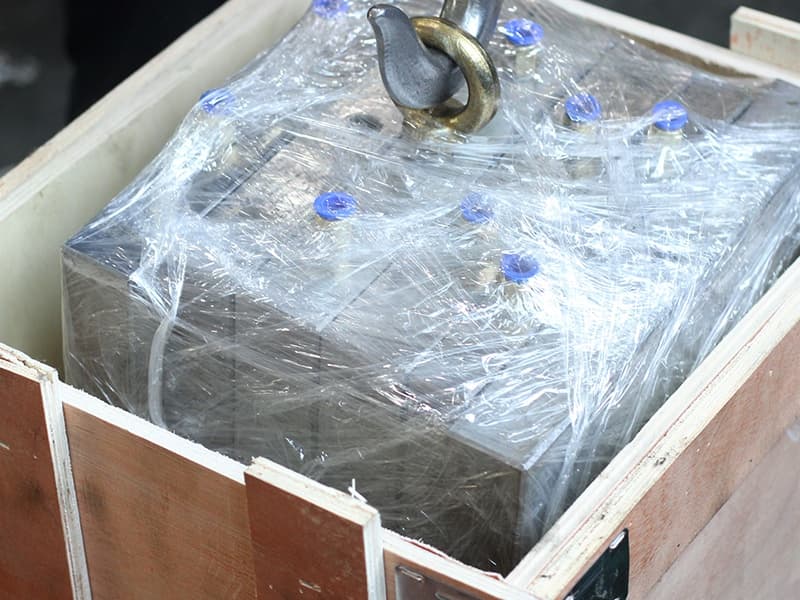
An export mould is not fully ready for production when it leaves the factory. It is ready when the receiving site can install it safely, connect the required utilities, reproduce an agreed operating condition and make acceptable parts with a documented handover. For packaging moulds, this transition can involve the injection machine, hot runner controller, chiller, compressed air, robot, material handling and downstream cap, bottle or container checks.
The best way to reduce commissioning delays is to begin installation preparation before shipment. The supplier and buyer should agree what is included in the mould package, what the receiving factory will provide, which production inputs will be available and what evidence is needed to close any open points from factory testing.
Confirm the production-machine interface
Before shipment, compare the mould with the receiving injection machine. Confirm clamp-tonnage range, platen dimensions, tie-bar spacing, locating-ring arrangement, nozzle radius, injection capacity, ejector interface, mould height, lifting access and the space needed for any side actions. A mould can be mechanically sound yet unsuitable for a particular machine if these interfaces were assumed rather than checked.
Send the machine data sheet early and record any adapter, spacer, coupling or special plate required. For a cap or preform mould, also confirm the arrangement for the hot runner controller and any valve-gate control. For containers, lids or buckets, include robot clearance, take-out access and stacking or in-mould-labelling equipment where applicable.
Map the utilities and connections
Cooling-water connections, hydraulic circuits, pneumatic lines, electrical plugs and temperature-control zones should be labelled clearly. The receiving factory needs to know connection size, required pressure or flow range, water quality expectation, voltage, thermocouple arrangement and the number of heating zones. These details should be present in the handover documents, not inferred from a photo of the mould.
Poor preparation of utilities can create avoidable start-up problems: a cooling circuit connected incorrectly, a controller with an incompatible plug, no chiller capacity at the planned condition or an unavailable air supply for moving mechanisms. A short pre-installation checklist with site owners is usually faster than diagnosing these issues with a mould on the machine.
Use factory testing as the commissioning baseline
Factory testing is most valuable when the record is useful to the receiving team. The report should identify the mould, product revision, resin and colour used, machine used where relevant, controller settings, cycle conditions, sample observations and known limitations. If the customer’s final resin, bottle neck, label or automation is not available, make that visible in the record.
During shipment inspection, review the operating video, sample identification, mould movements, cooling and heating functions, spare-parts list and export packing. This is also the time to verify that lifting points, water manifolds, cables, plugs, accessories and manuals described in the order are included. A clean mould photo alone is not a commissioning package.
Plan the first site trial in stages
Start with an installation check before attempting production. Verify that the mould is level and secured, connections are correct, safety guards are in place and the controller communicates as intended. Then use dry cycling and low-risk function checks to observe opening, closing, ejection, slides or valve gates before moving to moulding conditions.
At the product trial stage, use the agreed resin and inspect the features that matter to the application: part weight, appearance, thread and sealing surfaces, tamper evidence, hinge action, lid fit, stackability or assembly interface. Record the machine and mould settings used for samples. A process established at one factory may need adjustment at another, so the objective is a controlled start-up—not an unsupported claim that every setting will transfer unchanged.
Assign responsibilities for training and support
The receiving team should know who is responsible for machine operation, controller setup, mould maintenance, sample approval and escalation of technical questions. Training may include safe handling, start-up and shutdown sequence, controller alarms, basic cleaning, preventive maintenance, spare-parts identification and storage procedure. The level of training should match the mould complexity and the experience of the local team.
For international projects, agree communication channels, time-zone coverage, remote video support and the documentation language before shipment. Clear responsibility helps avoid the situation where a problem is reported to the supplier without the relevant resin, machine setting, sample or alarm information needed to diagnose it.
Keep the handover package practical
A useful package normally includes the approved mould specification, drawings or connection layout as agreed, trial report, sample record, operating and maintenance guidance, spare-parts list, packing list and contact details for support. The buyer should store this information with the mould’s maintenance history. It becomes the reference when a cavity insert is serviced, a heater is replaced or the tool moves to another production site.
The delivery process is stronger when it recognizes real boundaries. The mould maker can validate the agreed factory-test conditions and prepare the tool for shipment. The receiving site must validate its own utilities, machine, resin, operators and downstream process. Recording this distinction builds trust and supports a faster, more controlled production launch.
Frequently asked questions
What information is needed before installing a new mould?
Prepare the mould specification, receiving-machine data sheet, utility details, controller information, approved resin, trial records, connection layout, lifting plan and named owners for commissioning and sample approval.
Should the customer repeat a factory acceptance test after installation?
The site trial should confirm that the mould works with the customer’s own machine, utilities, resin and process. It can use factory-trial evidence as a baseline, but it should document the receiving-site conditions separately.
What should be checked before export shipment?
Check the mould identification, included accessories, trial evidence, sample record, connection labels, spares, manuals, corrosion protection, packing method and the documents required by the purchase order.
Talk to a mould engineer
Mid-article CTA placement: after “Use factory testing as the commissioning baseline.” Use “Ask for Product Catalog” with: “Send your machine data and product requirements for a practical mould-and-machine interface review.”
Get a Quote →