
Plastic Cap Moulds · 9 min read
Published: October 8, 2026
Plastic Cap Mould Torque Retention and Leakage: A Buyer FAT Guide
Set a traceable boundary between cap-mould acceptance and real bottle-and-closure qualification.
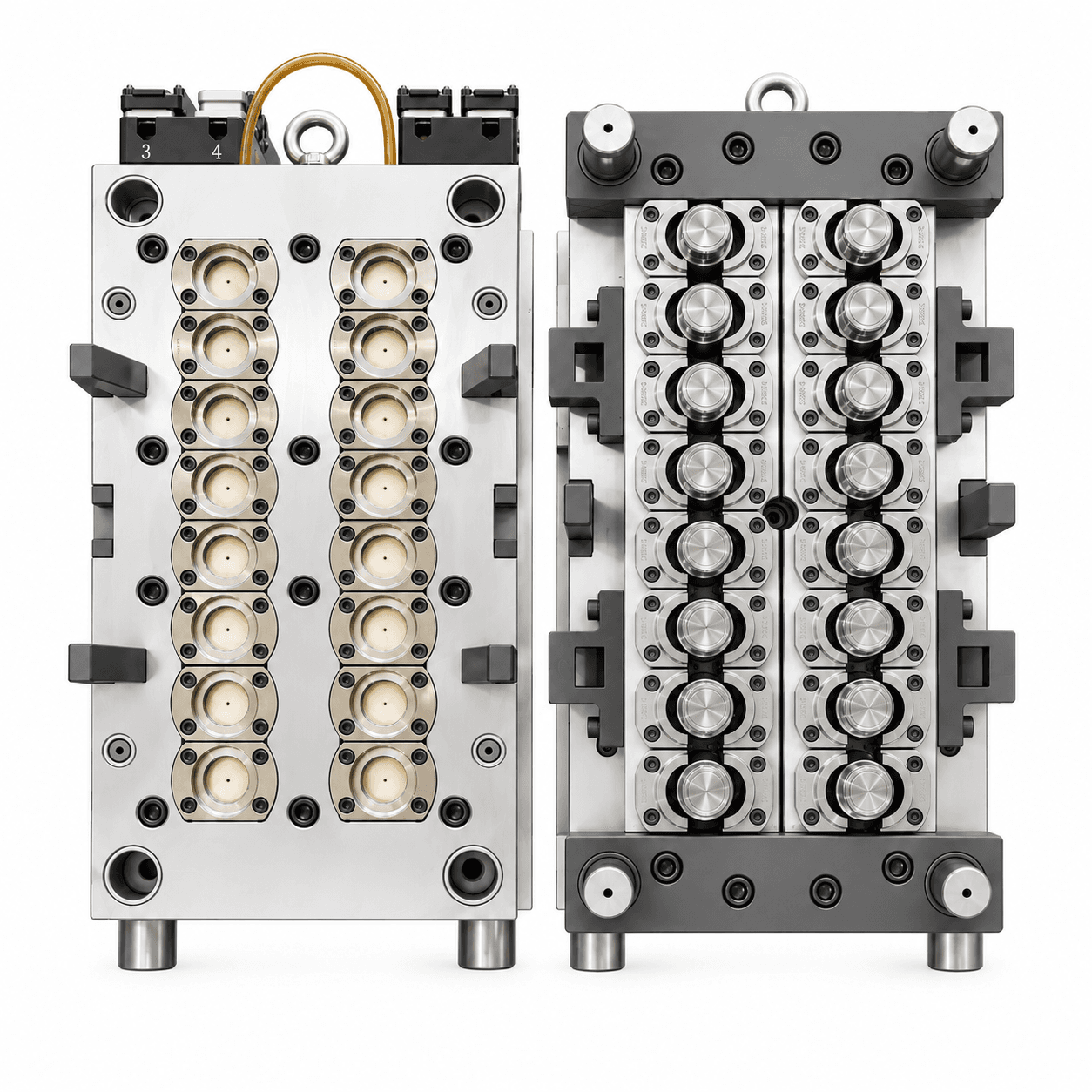
A cap can look clean, release smoothly and still fail as part of a package. Leakage, opening torque and retained torque depend on the cap, matching bottle finish, liner or seal design, resin, capping equipment and test conditions. A mould supplier cannot certify an unknown filling line from a cap-only trial. A useful factory acceptance test (FAT) instead creates traceable evidence for the moulded closure and clearly assigns the packaging-system tests that must follow.
This guide helps buyers specify the handover between cap-mould acceptance and bottle-and-closure qualification. It is relevant to threaded beverage, water, edible-oil and household closures; specialty safety or regulated packages need their own approved protocols.
Start With the Complete Closure Interface
Use revision-controlled drawings for the cap, the matching bottle neck finish and every functional element: thread, sealing land, plug or liner, tamper band, bridge and venting feature. Record the intended resin and masterbatch, cap mass, machine, cavity count, target output, capping method and product environment. Do not ask the mould maker to guarantee a leakage value without defining the corresponding bottle and closure procedure.
The buyer should establish which torque is being discussed. Application torque is the value used while closing. Removal torque is the force required to open the package. Retained torque is measured after a defined time and condition. They are related but not interchangeable. ASTM lists D2063/D2063M for torque retention of continuous-thread closure systems and D3474 for torque-meter calibration and use; use the current purchased standard and the buyer's product protocol rather than copying generic limits.
| Buyer input | FAT decision | Evidence to retain |
|---|---|---|
| Cap and bottle-neck drawings | Functional interfaces and revision | Controlled drawing list |
| Resin, colour and cap mass | Moulded-part comparison | Material and sample record |
| Capping head and closure method | Scope of package trial | Capping settings and bottle IDs |
| Torque and leak protocol | Timing, temperature and sample quantity | Approved test plan |
| Cavity and production target | Representative sampling | Cavity-labelled samples and results |
Separate Mould Quality From Package Performance
Confirm the cap before capping it
During the mould trial, inspect each identified cavity for mass, thread definition, sealing features, tamper-band bridges, flash, short shots, sink marks and visible damage from ejection. Retain sample IDs and process conditions. Averages can hide an isolated cavity with a damaged thread or inconsistent seal geometry, so report individual results or an agreed cavity grouping.
Use the real matching neck finish
A cap may turn acceptably on a non-production bottle yet behave differently on the actual neck finish. For any functional trial, use a controlled bottle drawing or production-representative bottles, identify their source and record the closure equipment. Keep bottle variation separate from cap variation in the report. If the matching bottle is not available at FAT, state that torque and leakage remain open site-qualification items rather than calling the mould fully package-approved.
Build a Torque and Leakage Test Plan
Agree the sample count, cavities, capping torque, application speed, downward force where relevant, conditioning time, orientation, temperature, test liquid or pressure condition, inspection interval and pass/fail authority. A short visual check immediately after capping is not torque-retention evidence. Torque changes over time and environmental conditions; the agreed timing must travel with every data point.
For leak testing, specify the package orientation, fill level, closure application, test duration and observation method. A water-only bench test may be useful for process screening but may not represent the buyer's product, temperature cycle or transport exposure. Do not claim chemical compatibility, shelf life or regulatory conformance unless the buyer's application test actually covers it.
Run a Traceable Factory Acceptance Trial
Stabilize and label samples
Record mould revision, active cavities, resin lot, masterbatch, machine, hot-runner or cooling settings, cycle conditions and take-out method. Exclude start-up parts according to the approved plan. Label retained caps by cavity and collection time; label bottles and completed packages as well. Take samples across consecutive stable cycles so a one-off setting adjustment cannot be presented as normal production.
Measure and report the whole sequence
Record the applied torque with the identified meter, then measure removal or retained torque at the agreed interval. Log meter identity and calibration status, operator, bottle ID, cap cavity, condition and result. Link any leak observation to the same package ID. Report raw results, not only an average. When a failure occurs, preserve samples and distinguish cap geometry, mould condition, bottle finish, capping setup and test method before changing steel or process settings.
Define What Remains for the Buyer Site
The supplier's FAT can show that caps from the stated mould are repeatable and that a documented package test was performed under defined conditions. It cannot automatically cover the buyer's fillers, cappers, beverages or oils, distribution route, storage profile and legal market requirements. Put those site trials in an open-items register with a test owner, protocol, schedule and approval criterion.
Before shipment, request the cavity sample record, approved cap and bottle drawings, trial settings, torque and leak data, instrument records, mould-running video, spare-parts list and export-packing photographs. At commissioning, repeat the agreed checks after the production machine and capping equipment are stable. Compare any difference in resin, bottle supplier, capper or test timing with the FAT conditions before deciding that a mould change is needed.
Conclusion
Torque retention and leakage are package-system outcomes, but the mould FAT is where disciplined evidence begins. Define the cap-and-neck interface, sample by cavity, document the capping and measurement method, and separate factory evidence from the buyer's real-product qualification. That approach turns a vague "no-leak" expectation into a practical release plan.
Frequently asked questions
Is a cap-only trial enough to approve leakage?
No. Leakage requires a matching bottle finish, controlled closure application and an agreed method. A cap-only trial can verify moulded features but cannot prove package sealing.
Is application torque the same as retained torque?
No. Application torque is set at capping; retained torque is measured after a stated condition and time. The test report should identify both rather than treating them as one value.
Why should torque results identify the cap cavity?
An isolated thread, seal or tamper-band issue may affect only one cavity. Cavity traceability allows the team to correct the relevant cause instead of averaging away the evidence.
Can a FAT replace site testing with the actual product?
No. FAT establishes a baseline under documented conditions. The buyer's product, capper, storage and distribution conditions still need application-specific validation.
Talk to a mould engineer
Plan a cap torque and leakage FAT: Send your cap and bottle-neck drawings, resin, cavity target, capping method, product conditions and acceptance priorities for a practical validation plan.
Get a Quote →