
PET Preform Moulds · 9 min read
Published: October 7, 2026
PET Preform Mould SKU Changeover: A Buyer Acceptance Guide
Define a traceable conversion and acceptance plan for a new preform SKU across tooling, factory testing and site restart.
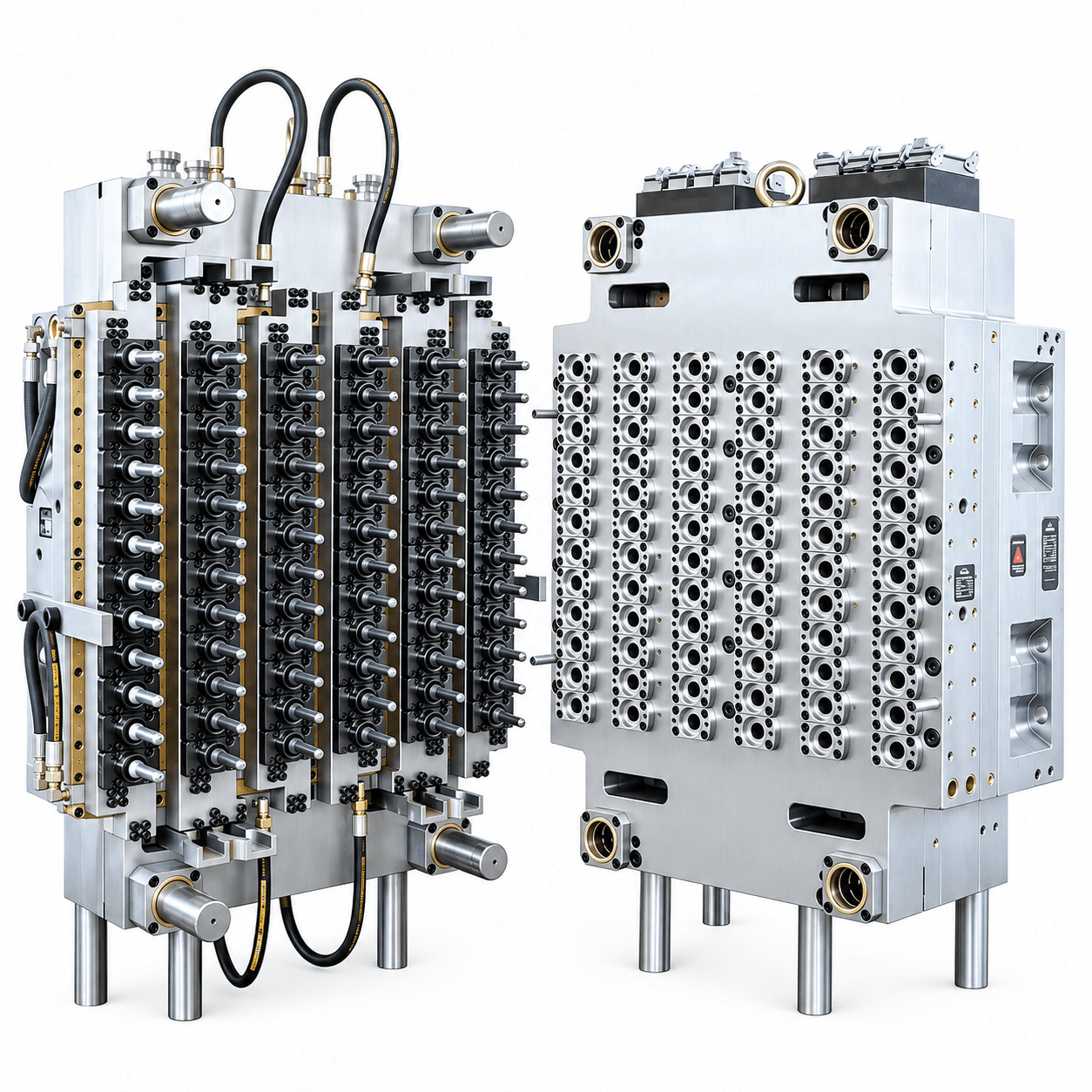
Changing a PET preform SKU is not merely swapping a labelled part in a mould. A new preform weight, body profile, neck finish or resin can change the tooling, process window and downstream bottle performance. Buyers should establish the exact conversion scope, test evidence and responsibility for restart before accepting a supplier's promise of a quick changeover. This guide explains how to specify and accept that work without assuming every mould can be converted in the same way.
Define the SKU and the Business Case
Start with controlled drawings for the current and proposed preforms, their matching closures and the intended blown bottles. Record nominal weight, neck finish, body and gate geometry, resin specification, target output, order frequency and expected changeover frequency. Include the injection machine, hot-runner controller, take-out equipment, cooling utilities and blow-moulding line. A conversion that works in a toolroom but blocks the receiving line is not a successful production change.
Ask whether the goal is a new bottle format, lower material use, seasonal SKU flexibility or replacement of worn components. Each goal has a different acceptance basis. A lighter preform, for example, must still be judged as a bottle-and-closure system; mass reduction alone is not acceptance evidence. Existing supplier literature describes flexible PET systems and mould conversions, but its advertised changeover speed belongs to those specific configurations, not to every installed mould.
| Buyer-controlled input | Conversion decision | Evidence to request |
|---|---|---|
| Current and target preform revisions | Which neck, body and gate surfaces change | Approved drawings and marked comparison |
| Bottle and closure requirements | Whether the package interface remains valid | Matched samples and qualification plan |
| Machine and auxiliary details | Mechanical, electrical and utility compatibility | Interface list and installation drawing |
| Resin and output plan | Trial window and representative sampling | Trial sheet with material and cavity IDs |
| Changeover frequency | Handling, storage and repeatability needs | Work instruction and component inventory |
Choose a Conversion Path, Not a Marketing Label
Replaceable components versus a new mould
The supplier should identify whether the proposed work uses cavity or core inserts, neck rings, gate components, cooling parts, hot-runner changes, or a complete new mould. Request part numbers and a revision-controlled bill of materials. Do not assume a different neck finish fits the existing stack because two closures share a nominal diameter. Confirm the approved finish drawing, neck-ring design, handling clearances and downstream closure match.
Compare conversion cost with a separate mould, including engineering, spare sets, machine downtime, sampling and validation. A reusable mould base can reduce duplicate investment only if the interfaces, condition and production schedule justify it. If the original tool has wear or undocumented modifications, include inspection and refurbishment in the quoted scope instead of hiding those tasks inside an optimistic changeover time.
Check the whole production cell
Map the proposed component change to mould height, clamp pattern, ejector connection, robot grippers, take-out tubes, water manifolds, temperature-control zones and part handling. Some changes also affect blow-moulding settings, bottle inspection, capping and filling. Each interface needs an owner. The mould supplier can confirm tooling compatibility; the package owner must approve commercial bottle performance and any application-specific compliance requirements.
Freeze Acceptance Criteria Before Steel Is Cut
Define the critical characteristics for each SKU: neck dimensions and sealing surfaces, preform mass, visual gate condition, wall distribution, concentricity and defects that disrupt blowing. Use the buyer's drawing tolerances and test methods rather than generic claims such as “good quality.” Agree cavity identification, sampling after a stable process, measurement equipment, conditioning and retained reference samples. State whether every cavity or a risk-based subset is checked for each characteristic, and who approves deviations.
For a proposed lightweight SKU, add bottle-level checks relevant to the application: capacity, top load, closure fit, leakage, handling or carbonation performance as appropriate. Those tests may require the buyer's production line. Do not turn a preform FAT into an unsupported claim that the complete filled package is qualified.
Verify the Converted Tool at Factory Acceptance
Record the starting condition and the change
Before removing components, identify the mould serial number, installed SKU, components, process settings and known open issues. Photograph connections and orientation. Follow the agreed safe isolation and lifting procedure; the site team must approve any safety-critical method. During assembly, record component IDs, torque or fit checks where specified, water and electrical connections and the person who signed off each step. This creates a repeatable work instruction rather than a one-off demonstration.
Trial every claimed operating configuration
Run the target SKU with the stated resin, machine and auxiliary equipment. Record start-up losses separately from stable production samples. Trace samples to cavities and trial conditions; inspect neck dimensions, weight, gate appearance and handling through the take-out system. If the quotation promises operation of both old and new SKUs, demonstrate both directions of the changeover and define the cleaning, stabilization and measurement steps. One short video or a single attractive sample cannot establish repeatability.
When a defect appears, retain the failed cavity ID and process record. Check whether it follows an insert, neck ring, cooling connection, hot-runner zone or machine setting before changing the steel. Agree corrective action and repeat the relevant test under the same acceptance method. Report elapsed changeover time only with a clear start and end point; it should not be presented as a universal performance guarantee.
Prepare Shipment and the Receiving Factory
Ship a revision-controlled component inventory, drawings, connection map, spare and wear-part list, FAT report, sample labels, settings sheet, changeover work instruction and unresolved-issue register. Protect precision neck and gate surfaces in identified packaging. State storage and preservation conditions for the unused SKU components so they remain usable at the next switch.
At the destination, verify the installed mould and utilities against the FAT configuration. Train operators on identification, handling, assembly sequence and restart checks. Reconfirm critical dimensions from stable site samples and complete any bottle, closure and filling-line qualification assigned to the buyer. A different machine, resin batch, cooling-water condition or take-out system can change results; compare the actual conditions before attributing a discrepancy to the conversion hardware.
Conclusion
A useful PET preform SKU conversion proposal names the parts being changed, the interfaces that stay fixed, the tests to be repeated and the documents handed over. Buyers should accept a proven production method for their own machine and package, not a generic promise of a fast swap. Keep the preform FAT, bottle qualification and site restart as separate, traceable decisions.
Frequently asked questions
Can one PET preform mould always make several neck finishes?
No. Interchangeability depends on the mould architecture, approved neck drawings, stack geometry and related handling equipment. Ask for a component-level feasibility review before assuming a neck-ring swap is sufficient.
Should changeover time be an acceptance target?
Only if the agreed method defines the starting state, trained personnel, available tools, safety steps, cleaning, stabilization and first acceptable sample. Record the measured time for that configuration rather than treating it as a universal claim.
Is a successful preform trial enough to approve a lighter bottle?
No. The bottle, closure and filling process need their own application-specific qualification. A preform FAT verifies only the moulding conditions and characteristics actually tested.
What must travel with the conversion kit?
Send identified components, revision-controlled drawings, installation instructions, connection maps, spare parts, trial records and traceable reference samples. Record any open tests assigned to the receiving plant.
Talk to a mould engineer
Discuss a PET preform SKU conversion: Send your current and target preform drawings, neck finishes, resin, mould and machine details, output plan and bottle requirements for a scoped tooling and acceptance discussion.
Get a Quote →