
PET Preform Moulds · 8 min read
Published: September 29, 2026
28mm PCO 1881 vs PCO 1810: Complete Comparison for PET Bottle Projects
Compare PCO 1881 and PCO 1810 as complete bottle-and-closure systems before releasing preform or closure tooling.
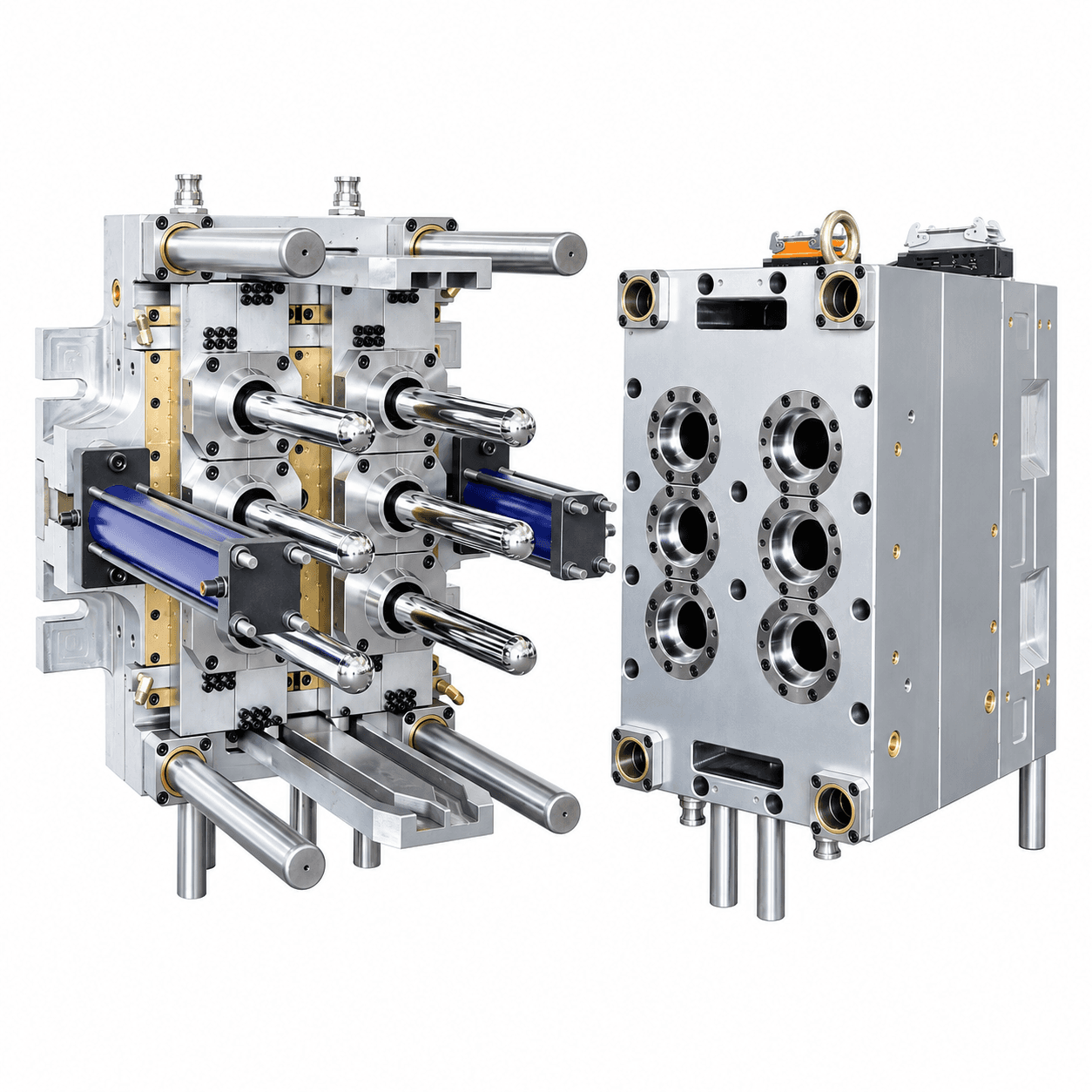
PCO 1881 and PCO 1810 are often grouped together as 28mm PET beverage neck finishes. That shorthand is useful for a first conversation, but it is not enough to release preform or closure tooling. The two finish families may require different bottle, closure, capper and validation assumptions.
The Short Answer
Neither finish is universally “better.” PCO 1881 is generally associated with a shorter, lighter neck-finish approach, while PCO 1810 remains widely used in established bottle and closure programmes. The correct choice depends on the approved package specification and the compatibility of the complete production chain.
Compare the Complete Package System
| Decision point | Why it matters |
|---|---|
| Approved neck drawing | Controls threads, seal, support ring and tolerances |
| Closure drawing | Confirms thread engagement, liner or seal and tamper band |
| Capping equipment | Determines change parts, torque and handling compatibility |
| Product application | Defines pressure, filling and distribution requirements |
| Existing installed base | May favour continuity with current bottle and cap systems |
| Material and weight target | Must be validated without compromising performance |
Nominal 28mm diameter alone does not establish any of these items.
Why the Finish Change Affects Tooling
In a PET preform mould, neck rings and core components reproduce the finish geometry. In a cap mould, cavity and core components form the corresponding closure. A finish change can affect component drawings, cooling around the neck, inspection gauges, capper change parts and quality-control specifications.
A programme should not assume that an existing PCO 1810 tool can simply run PCO 1881, or vice versa. The mould maker must review the actual insert design and determine whether a conversion is technically appropriate.
Weight Reduction Requires Validation
Reducing finish material can be commercially attractive, but it is not a standalone target. The bottle and cap must still meet the agreed functional requirement under real filling, capping, transport and opening conditions. Validation may involve the bottle manufacturer, closure supplier, filler and brand owner.
For mould sourcing, buyers should avoid demanding a universal “lightest” finish. Instead, request a proposal that follows the approved package drawing and identifies the assumptions used for resin, preform weight, closure, process and testing.
What to Confirm Before Ordering a Mould
- Control one current drawing revision for the neck and one for the closure.
- Identify the product, filling condition and performance requirement.
- Confirm capper and inspection equipment compatibility.
- Share the injection machine, preform weight and target output.
- Agree the factory-test samples and measurements before design release.
- Plan the shipment and installation handover, including spare neck components and documentation.
Factory Trial Evidence
A factory trial should show more than one attractive preform. Ask for identified samples from multiple cavities, neck-dimension checks, weight records, visual assessment and, when available, a functional check using the matching closure. The report should state the trial resin and relevant machine conditions.
Frequently asked questions
Can the same cap fit PCO 1881 and PCO 1810?
Do not assume so. Confirm with the approved closure and neck drawings, then validate the fit in the intended package application.
Does a shorter finish automatically mean a better bottle?
No. It may support material reduction, but the complete bottle-and-closure system must satisfy the agreed functional requirements.
What should a tooling supplier receive?
Provide controlled neck and closure drawings, resin, product application, preform weight, output requirement and machine information.
Talk to a mould engineer
Request a 28mm compatibility review: Send your bottle, preform and closure drawings for a practical pre-tooling review.
Get a Quote →