
Plastic Cap Moulds · 9 min read
Published: September 29, 2026
Complete Guide to Plastic Bottle Cap and Closure Types
Select the correct plastic bottle closure through product application, neck compatibility, function, tooling and line-validation requirements.
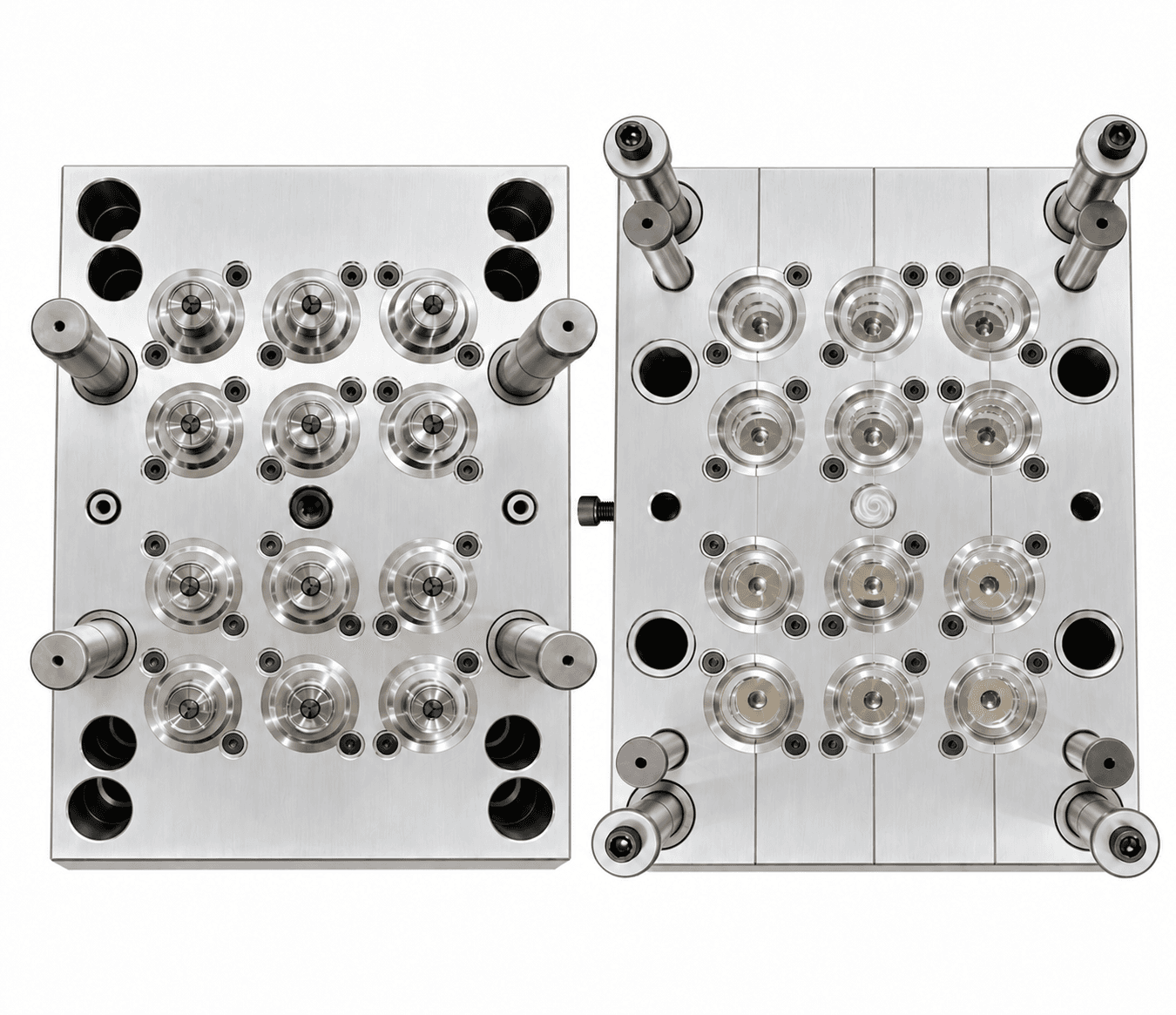
Plastic bottle caps and closures protect the product, connect the package to the filling line and shape the user experience. Selecting the correct closure starts with application and bottle interface, then continues through mould design, resin, capping equipment, quality checks and downstream handling.
Water Caps
Water caps are commonly lightweight screw closures designed for high-volume packaging. Buyers should confirm neck-finish compatibility, sealing geometry, tamper evidence, cap weight, resin, capping torque and line-speed expectations. In high-cavity projects, gate condition and cooling consistency are important to cap appearance and repeatability.
CSD Caps
Carbonated soft drink closures form part of a pressure-capable package system. The cap, bottle neck, liner or sealing geometry, capping process and product pressure must be validated together. Avoid treating a CSD closure as a standard water cap with a different logo or colour.
Oil Caps
Edible-oil and lubricant closures may require controlled pouring, tamper evidence, drip management or an insert. Confirm the neck interface, product compatibility, torque requirement and any assembly operation. A mould proposal should identify which components form the cap and which are supplied or assembled separately.
Flip-Top Caps
Flip-top closures are used for personal care, household, food and dispensing applications. The hinge, lid retention, opening force, sealing area and dispensing feature require functional testing. The cap mould must manage detailed geometry, ejection and cooling without compromising hinge performance.
Sports Caps
Sports caps are typically designed for convenient drinking or dispensing and may include a pull, push or valve-like feature. The project should specify the complete closure assembly, bottle-neck interface, intended use and opening/closing performance. Assembly and leak testing may be as important as the injection mould itself.
Tamper-Evident Caps
Tamper-evident designs show whether a package has been opened. The band, bridges, neck-retention feature and break performance must align with the bottle finish and capping process. Factory samples should be assessed with the matching bottle where possible.
5 Gallon Caps
Five-gallon water caps have a different application context from small beverage closures. They may include non-spill, pull-tab or valve-related functionality and need to work with the returnable bottle and water-dispenser process. Share the approved bottle opening, cap drawing and functional test requirement before tooling is specified.
Closure Selection Checklist
For every closure type, define:
- approved cap and neck-finish drawings;
- product and filling condition;
- resin and colour requirement;
- sealing and tamper-evidence expectation;
- annual output and injection-machine data;
- capping, assembly and inspection equipment;
- factory-test samples and acceptance criteria;
- spare-parts and shipment documentation.
Factory Testing and Commissioning
Good factory testing records mould operation and samples from multiple cavities. Functional testing should use the intended bottle and closure configuration whenever practical. At shipment, inspect the mould condition, accessories, spares, electrical and water markings, preservation and crate closure. During installation preparation, confirm the machine, utilities, controller and downstream equipment interfaces.
Frequently asked questions
Can one cap mould make several closure types?
Usually not without changes. Different closure geometries, threads, hinges and functions need application-specific cavity and core details.
Is cap appearance enough to select a closure?
No. Function, neck compatibility, sealing, tamper evidence, resin and the filling-line process must be considered together.
What should be sent for a cap mould quotation?
Send the cap and bottle-neck drawings, resin, annual output, target cavity count, injection-machine information and any functional requirements.
Talk to a mould engineer
Request a closure review: Send your cap sample or drawing, bottle-neck data and output target for a practical mould proposal.
Get a Quote →