
Plastic Bucket Moulds · 10 min read
Published: September 30, 2026
IML Bucket Mould Automation Readiness: A Buyer Guide Before Tooling
Specify label, mould and automation as one packaging cell before releasing an IML bucket mould project.
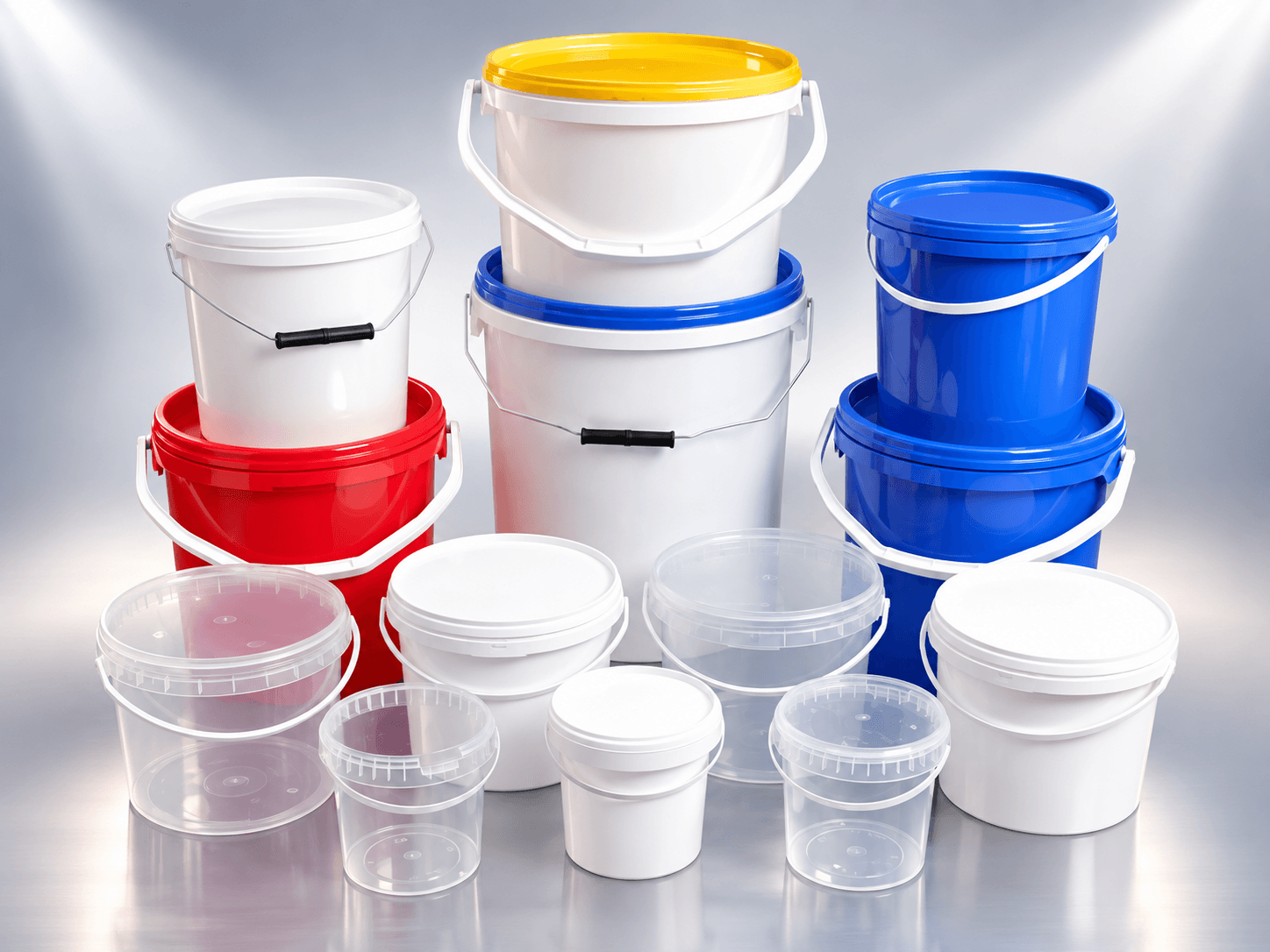
In-mould labeling (IML) can create a durable decorated bucket without a separate post-mould labeling operation, but it is not a label-only decision. The mould, label, robot, static-control approach, injection machine, cooling, part handling and quality checks must work as one cell.
This guide helps packaging buyers prepare an IML bucket-mould project before tooling starts. It focuses on the information that allows a mould maker and automation partner to assess feasibility, trial the correct conditions and hand over a cell that the receiving team can commission methodically.
Start with the Finished Pack, Not a Generic IML Claim
Provide the approved bucket and lid drawing, intended volume, resin, target weight, label artwork or dieline, label material, decoration coverage, filling product, stacking requirement, machine data and output objective. For food, paint, chemical and household packaging, the functional requirements can be quite different even when the bucket silhouette looks similar.
The label must be reviewed alongside the moulded part. Its size, stiffness, edge condition, print direction, static behavior and placement tolerance can affect pickup, transfer and visual registration. A mould cannot compensate for an undefined label specification.
| Workstream | Questions to resolve before design release |
|---|---|
| Bucket geometry | Draft, ribs, rim, lid interface, handle features and stacking surfaces |
| Label | Material, die-cut accuracy, artwork orientation, coverage and storage condition |
| Automation | Robot concept, magazine, end-of-arm tooling, static control and safety interlocks |
| Mould | Cavity count, gate location, venting, cooling, ejection and label-retention method |
| Production cell | Machine interface, cycle target, downstream handling, inspection and operator access |
Mould and Automation Interfaces
Label retention and placement
During each cycle, the label has to reach the intended cavity surface, stay in position during injection, and release with the bucket in a controlled manner. Static charging, vacuum, mechanical support or a combination may be used depending on the project. The proposed method should be documented, including the service points that operators will need to access.
Gate, flow and surface appearance
Gate location influences filling and can interact with label appearance, weld lines, gloss and the visible panel. The correct choice depends on bucket geometry, resin and decoration intent. Review a proposed gate concept with the artwork orientation rather than treating label and mould reviews as separate meetings.
Cooling, ejection and part removal
IML automation has to receive a part consistently. Uneven cooling, warpage, difficult ejection or unstable part orientation can turn a nominally fast robot into a repeated source of stoppages. Ask how the tool supports stable ejection, what sensors are proposed and how a failed pickup or missing label is handled safely.
Define a Practical Factory Acceptance Test
The factory test should reflect the actual production concept as closely as reasonably possible. Agree whether labels supplied by the buyer will be used, what resin condition applies, which bucket and lid revisions are valid, how visual inspection is performed, and what evidence will be retained.
Useful FAT evidence may include a controlled running video, samples from identified cavities, label-placement observations, checks of visible surfaces, rim and lid fit where available, machine/robot cycle observations, and an open-items list. It should distinguish a one-off sample from a stable run.
Do not define an acceptance plan that requires unmeasured claims such as “perfect label placement.” Instead, define the product zones, reference artwork, inspection conditions and allowable project-specific deviations agreed by the responsible parties.
Plan Commissioning Before Shipment
IML projects need more installation preparation than a stand-alone bucket mould. Confirm electrical voltage, robot and safety interfaces, pneumatic and vacuum requirements, static-control equipment, water connections, label-magazine requirements, spares, software or parameter handover, and training responsibilities.
Before crating, inspect lifting points, preservation, protection of cavities and electrical components, connection labels and packing photos. Include manuals, circuit information, maintenance items and a clear list of supplied versus buyer-supplied automation equipment.
At the customer site, commission in stages: utilities and safety first, dry robot motions second, label transfer third, then moulded parts and visual quality. This staged process reduces the temptation to change several variables at once when an issue appears.
Operating and Maintenance Questions
Ask who owns routine cleaning, how labels are stored and conditioned, which sensors are critical, what spare vacuum cups or static components are recommended, and how an operator recognizes a missing or misaligned label. A well-designed IML cell should make routine checks accessible, not dependent on an unavailable specialist.
The most useful maintenance record combines mould observations with automation events. If a defect appears, the team can then see whether it follows a cavity, a label batch, a pickup station, a water circuit or a process setting.
Frequently asked questions
Can an existing bucket mould simply be converted to IML?
Sometimes, but it depends on geometry, gate position, surface condition, ejection, label retention, automation space and the original mould construction. It requires an engineering review rather than an assumption.
Does IML always reduce total packaging cost?
It can remove a separate labeling stage, but the result depends on label cost, automation investment, operating stability, scrap, product volume and the alternative decoration process.
What should buyers supply for an IML bucket RFQ?
Provide the bucket and lid drawings, resin, weight, label artwork or dieline, volume, machine data, target output, automation preference and inspection requirements.
Talk to a mould engineer
Request an IML bucket-mould review: Send your bucket and lid drawings, label dieline, resin, output objective and machine or robot information for a practical cell-readiness proposal.
Get a Quote →